
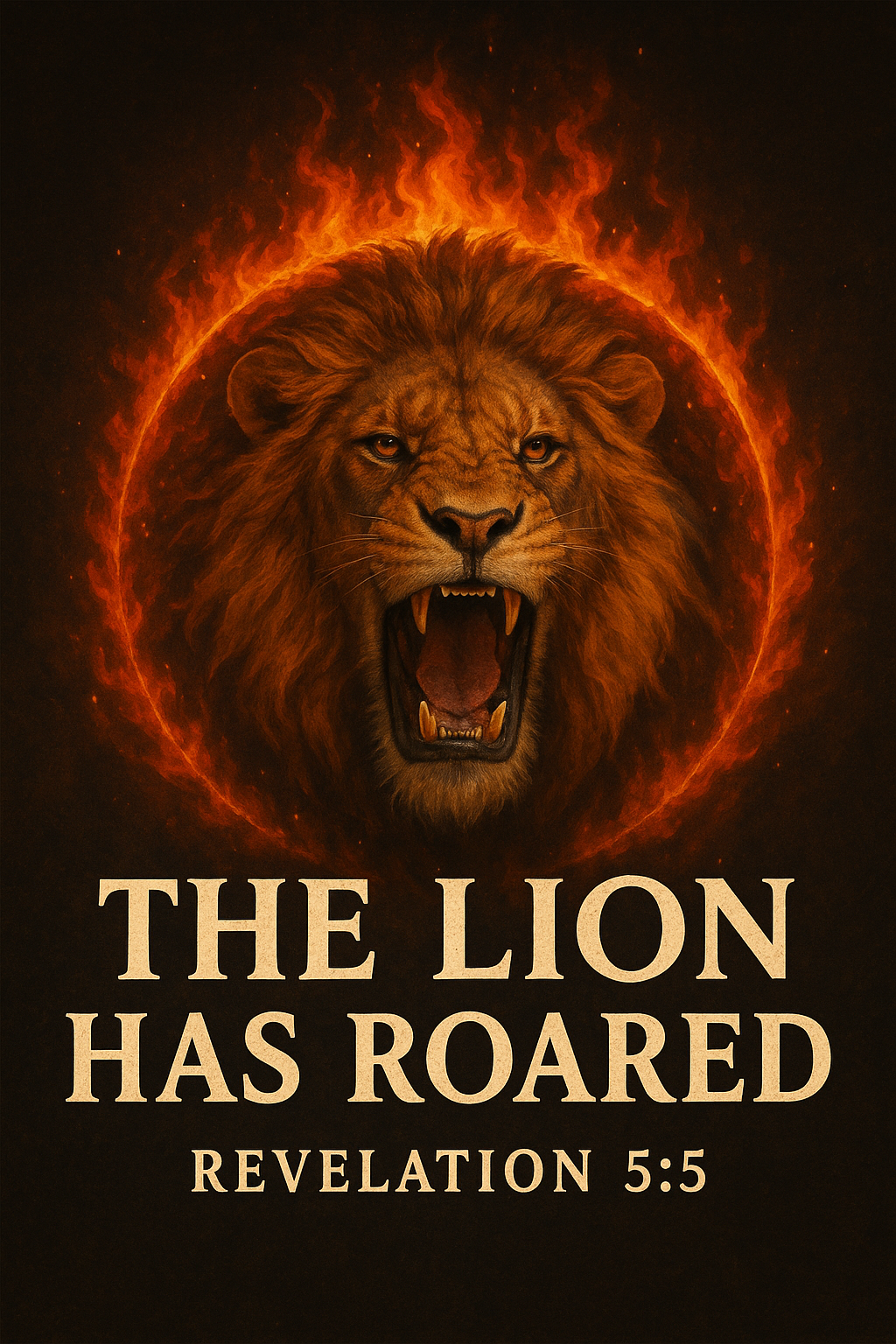
The title "Lion of the tribe of Judah" is rich with prophetic and symbolic significance, tying together threads from the Old Testament and culminating in the victorious identity of Jesus Christ.
The roaring LION represents kingly power, courage, and dominion. In ancient Israel, the LION was a known symbol of strength and leadership.
This title implies that Jesus is not only worthy, but also triumphant—the Victor who has conquered, as Revelation 5:5 says, "Do not weep! See, the Lion of the tribe of Judah... has triumphed."
This title implies that Jesus is not only worthy, but also triumphant—the Victor who has conquered, as Revelation 5:5 says, "Do not weep! See, the Lion of the tribe of Judah... has triumphed."
Tribal Prophecy Fulfilled
The phrase "tribe of Judah" harks back to Genesis 49:9–10, where Jacob blesses Judah:
“Judah is a lion’s cub ... The scepter will not depart from Judah... until he to whom it belongs shall come and the obedience of the nations shall be his.”
Jesus is the prophesied ruler from Judah, the long-expected Messiah whose kingship would never end.
“Judah is a lion’s cub ... The scepter will not depart from Judah... until he to whom it belongs shall come and the obedience of the nations shall be his.”
Jesus is the prophesied ruler from Judah, the long-expected Messiah whose kingship would never end.
Royal Identity of Jesus
The Lion title confirms Christ’s royal lineage. He is the rightful King— not only of Israel but of all nations.
It contrasts with His first coming in humility (as the Lamb) and emphasizes His second coming in majesty (as the Lion).
It contrasts with His first coming in humility (as the Lamb) and emphasizes His second coming in majesty (as the Lion).
The title "Lion of the tribe of Judah" is rich with prophetic and symbolic significance, tying together threads from the Old Testament and culminating in the victorious identity of Jesus Christ.
The roaring LION represents kingly power, courage, and dominion. In ancient Israel, the LION was a known symbol of strength and leadership.
This title implies that Jesus is not only worthy, but also triumphant—the Victor who has conquered, as Revelation 5:5 says, "Do not weep! See, the Lion of the tribe of Judah... has triumphed."
This title implies that Jesus is not only worthy, but also triumphant—the Victor who has conquered, as Revelation 5:5 says, "Do not weep! See, the Lion of the tribe of Judah... has triumphed."
Tribal Prophecy Fulfilled
The phrase "tribe of Judah" harks back to Genesis 49:9–10, where Jacob blesses Judah:
“Judah is a lion’s cub ... The scepter will not depart from Judah... until he to whom it belongs shall come and the obedience of the nations shall be his.”
Jesus is the prophesied ruler from Judah, the long-expected Messiah whose kingship would never end.
“Judah is a lion’s cub ... The scepter will not depart from Judah... until he to whom it belongs shall come and the obedience of the nations shall be his.”
Jesus is the prophesied ruler from Judah, the long-expected Messiah whose kingship would never end.
Royal Identity of Jesus
The Lion title confirms Christ’s royal lineage. He is the rightful King— not only of Israel but of all nations.
It contrasts with His first coming in humility (as the Lamb) and emphasizes His second coming in majesty (as the Lion).
It contrasts with His first coming in humility (as the Lamb) and emphasizes His second coming in majesty (as the Lion).
Jesus as the Conqueror
In Revelation 5, no one else is worthy to open the scroll, which symbolizes God’s plan for judgment and redemption.
But Jesus, as the Lion, has overcome sin, death, and Satan. He alone can unfold the Divine destiny of creation.
But Jesus, as the Lion, has overcome sin, death, and Satan. He alone can unfold the Divine destiny of creation.
The Paradox of the Lion and the Lamb
Right after He's called a Lion, John sees a Lamb that was slain (Rev. 5:6).
This shows a heavenly paradox: Jesus conquers not by force, but through sacrificial love.
He’s BOTH Lion (authority) and Lamb (atonement)— two natures united in one glorious Christ!
This shows a heavenly paradox: Jesus conquers not by force, but through sacrificial love.
He’s BOTH Lion (authority) and Lamb (atonement)— two natures united in one glorious Christ!
Universal Worship and Authority
The Lion's triumph leads to the heavenly chorus of praise (Rev. 5:9–14), where all creation worships Him.
His victory unleashes redemption for people from every tribe, language, people, and nation.
His victory unleashes redemption for people from every tribe, language, people, and nation.
Final Thought
The Lion of Judah is not just a fierce image—it’s a declaration: The King has won! The scroll will be opened. History will be fulfilled. And worship will erupt "in heaven and on earth and under the earth and in the sea" in a mighty, unified chorus of praise to the GREAT Lamb of God and Lion King!
The Great I Am
Jesus Christ is referred to as "The Great I Am" because He connects Himself directly to Jehovah God. Follow the button link below for more information: